
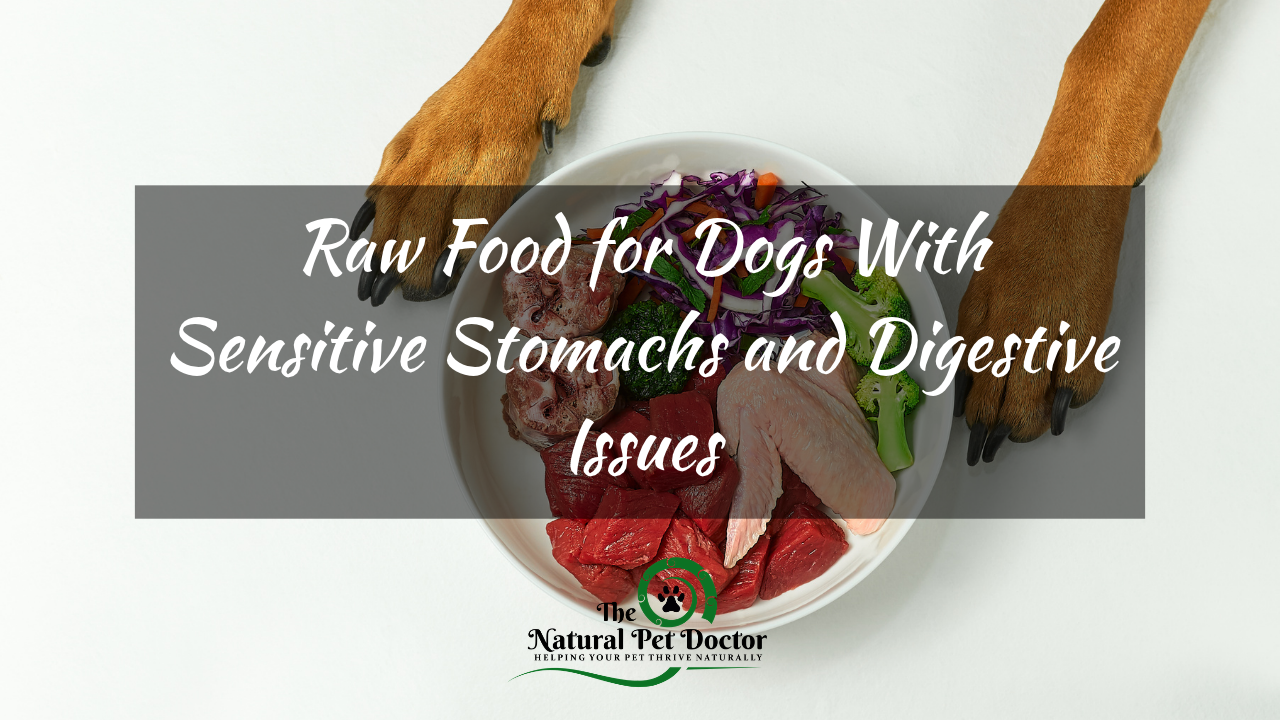
Raw Food for Dogs With Sensitive Stomachs and Digestive Issues
By Dr. Katie Woodley, BVSc, GDVCHM, cVMA, CVNN · Integrative Veterinarian & founder of The Natural Pet Doctor · Last reviewed: October 30, 2026
Can raw food help dogs with sensitive stomachs? In my experience, yes. I've seen thoughtfully formulated raw diets make a tremendous difference for dogs struggling with recurring diarrhea, gas, and inconsistent stools—even some who hadn't responded well to other diets.
As a veterinarian, I'm a big advocate for raw feeding. But the point isn't to put every dog on the same food. It's about understanding what their digestive system needs and choosing a complete, balanced diet that provides it while being as minimally processed as possible.
Key Takeaways
- Raw diets can be highly digestible. In one controlled feeding study, a frozen raw diet had 93% apparent protein digestibility versus 82% for the extruded diet tested.
- Food influences the gut microbiome. Research shows differences in bacterial communities and intestinal immune markers between dogs fed raw and kibble diets.
- Protein isn't the only variable. Fat, calories, feeding amounts, and the transition itself all matter for sensitive dogs.
- Early diet may matter long term. An observational study linked more minimally processed meat-based foods in puppyhood with lower odds of owner-reported chronic enteropathy later in life.
- Choose well-formulated raw food. Nutritional adequacy, consistency, manufacturing controls, and safe handling are non-negotiable.
I'll walk through how I approach raw feeding for dogs with sensitive stomachs and what I look for when evaluating a diet.
1. What Does Having a Sensitive Stomach Actually Mean?
A sensitive stomach isn't a medical diagnosis. It's a description of digestive symptoms that can occur for several different reasons.
Some dogs experience occasional digestive upset after eating something unusual. Others have chronic symptoms that keep returning, even when their diet hasn't changed.
Common signs include:
-
Intermittent diarrhea or loose stools
-
Excessive gas or bloating
-
Recurring vomiting
-
Mucus in the stool
-
Increased urgency to defecate
-
Inconsistent stools despite eating the same food
-
Appetite changes or signs of nausea
The important thing to understand is that these symptoms don't tell us exactly what's wrong.
When I hear this, I want to know what the symptoms look like and when they happen. Does the dog react after a change in protein? After a richer meal? During stressful events? Has the weight stayed stable?
Several factors can contribute to gastrointestinal symptoms.
- Diet-related issues: poorly tolerated ingredients, fat content, overfeeding, or rapid changes.
- Underlying GI issues: parasites, pancreatic dysfunction, chronic enteropathy, or intestinal inflammation.
- The gut-brain connection: stress can affect motility and gastrointestinal signaling.
Sometimes food is a big part of the answer. Sometimes food changes just mask the problem for a few weeks. If diarrhea keeps returning or your dog is losing weight, vomiting repeatedly, passing blood, or eating poorly, investigate the underlying issue with your veterinarian.
2. Why Does Digestibility Matter?
Digestibility tells us how much of a diet's nutrients your dog can digest and absorb. Most absorption occurs in the small intestine. What reaches the colon becomes fuel for microbes, affecting fermentation, gas, stool volume, and the molecules those microbes produce.
Fermentation isn't inherently bad - certain fibers support production of helpful short-chain fatty acids. But for a sensitive dog, the mix of protein, fat, fiber, and other substrates reaching the colon can change the whole digestive experience, potentially resulting in the symptoms of a sensitive stomach for your dog.
What do studies show about raw food digestibility?
A 2024 study by Geary and colleagues compared five commercial diets in ten healthy adult dogs. The frozen raw recipe had higher apparent protein digestibility and lower fecal output than the extruded recipe tested.
| Study measurement | Extruded diet | Frozen raw diet |
|---|---|---|
| Apparent protein digestibility | 82.0% | 93.0% |
| Apparent fat digestibility | 92.1% | 94.3% |
| Average fecal output per day | 90.2 g | 37.3 g |
Geary et al., 2024: specific diets in healthy dogs; these figures do not describe all raw foods or all kibbles.
Earlier research from Algya et al. (2018) also reported high macronutrient digestibility in the raw and lightly cooked foods tested, including approximately 97.5% apparent fat digestibility for the raw diet versus 92.1% for the extruded diet.
These results are interesting and fit what I've seen in practice: some dogs have much more consistent digestion on a properly selected raw food. But the recipes differed in more than processing—protein, fat, fiber, and other ingredients mattered, too.
What about the gut microbiome?
This is where things get even more interesting for me as a veterinarian. The gut microbiome isn't just bacteria living alongside our pets; it's involved in nutrient metabolism, microbial metabolites, and communication with the intestinal immune system.
In Hiney et al. (2024), researchers compared 55 healthy dogs fed raw meat-based diets or kibble. After statistical correction, the groups differed in fecal microbial composition and 63 serum metabolites. Raw-fed dogs also had higher fecal intestinal alkaline phosphatase (IAP), IgA, and IgG—important markers of intestinal immune activity. The study did not find lower systemic inflammatory markers in the raw-fed group.
A 2026 paper by Solís and colleagues found diet-associated differences in fecal microbiota and certain diversity indices. The study found the raw-fed dogs had higher microbial diversity than dogs fed a commercial extruded kibble diet.
3. Which Proteins Are Best for Sensitive Dogs?
Chicken? Turkey? Beef? Rabbit? The best protein is one that works for your dog in a complete and balanced recipe. There's no universal winner, and chicken isn't automatically inflammatory.
I start with dietary history for a sensitive dog. Which proteins has the dog eaten for years? Which recipes have actually been tolerated? Are we simply trying to simplify the bowl, or are we investigating a suspected adverse food reaction?
Single-animal-protein recipes can help reduce variables and remove some of the burden on the gut to allow inflammation to settle for a sensitive dog. It's important to use diets that are still balanced to support your dog's whole body and not create nutritional deficiencies long-term. For sensitive dogs, I will start with a novel protein and use brands, like We Feed Raw, that have simple ingredient lists but are still completely balanced to support the dog.
Don't forget the fat
Here's a scenario I see often: a dog moves from turkey to beef, stools become loose, and beef gets blamed. But the new recipe might also contain more fat or more calories per serving. In this scenario, it may not actually be the protein type.
Compare the entire nutritional profile—including fat on a dry-matter or calorie basis when comparing foods with very different moisture levels.
4. What If Raw Feeding Hasn't Improved Your Dog's Digestion?
When a dog doesn't improve after switching to raw, I don't automatically conclude raw feeding was the wrong idea. I ask what else changed, whether the dog was an appropriate candidate in the first place, or whether the change was made too quickly.
| Check | Why it matters |
|---|---|
| Transition speed | A fast change may temporarily upset digestion. |
| Protein selection | Individual tolerance and dietary history matter. |
| Fat level | A richer recipe may not suit every GI condition. |
| Serving size | Overfeeding and calorie changes can affect stools. |
| Recipe consistency | Several simultaneous changes obscure what's helping. |
| Underlying disease | Pancreatic, inflammatory, and infectious causes may need diagnostics. |
How slowly should you transition?
Some healthy dogs manage a food transition over seven to ten days. For dogs with a sensitive or unstable gastrointestinal tract, I often slow things down to two to four weeks with veterinary guidance.
| Days | Current food | New food |
|---|---|---|
| 1–3 | 75% | 25% |
| 4–6 | 50% | 50% |
| 7–9 | 25% | 75% |
| 10+ | 0% | 100% |
Illustrative schedule for an otherwise healthy dog. Percentages are of daily calories, not equal grams or scoops. Don't push through persistent symptoms.
A 2023 puppy study by Liao et al. found fewer diarrheal symptoms after a gradual transition than an abrupt switch. It wasn't a raw-food study, but it's a useful reminder that how you change food matters.
If your dog keeps having digestive issues despite a slower food transition, stop hopping between formulas. Consider parasites, pancreatic function, chronic enteropathy, and other causes with your veterinarian. Selected probiotics or GI support may help, but adding supplements without a clear purpose can muddy the picture.
5. Can Puppies With Digestive Issues Benefit From Raw Feeding?
Yes—puppies can eat a properly formulated raw food that meets their growth requirements. But the growth life stage is not the time to improvise nutritional ratios, particularly calcium, phosphorus, and energy in large-breed puppies.
Could what puppies eat influence their gut health as adults?
This is one of my favorite research questions. In a 2023 study from the University of Helsinki, Vuori and colleagues evaluated owner-reported early feeding histories and later chronic enteropathy symptoms in thousands of dogs.
Dogs whose puppyhood and adolescent diets included more non-processed, meat-based foods had lower odds of owner-reported chronic enteropathy later in life. Diet patterns emphasizing ultra-processed, carbohydrate-based dry kibble diets were associated with higher odds. The association with the minimally processed pattern was strongest during puppyhood.
| Early-life dietary pattern | Association with later chronic enteropathy |
|---|---|
| More non-processed meat-based food in puppyhood | About 22% lower odds (OR 0.777) |
| More non-processed meat-based food in adolescence | About 13% lower odds (OR 0.873) |
| More ultra-processed dry-food pattern in puppyhood | About 29% higher odds (OR 1.287) |
These are associations per change in dietary-pattern score, not absolute disease-risk changes or proof of prevention. The study relied on owner-reported diet and symptoms.
Could early nutrition help shape gastrointestinal health later in life? It's an intriguing possibility, especially because the microbiome and immune system are developing in puppies. What we can't say is that this study proved raw feeding prevents disease.
However, I've seen in my own veterinary practice that starting puppies out on a minimally processed, raw food diet typically leads to fewer health conditions long-term.
For instance, We Feed Raw's frozen patties are formulated for all life stages, including growth of large-size dogs, while its freeze-dried recipes are for adult maintenance. Check the nutritional adequacy statement on the product you're actually feeding.
Puppies with persistent vomiting or diarrhea need prompt veterinary evaluation; raw food isn't a substitute for diagnosing infection, parasites, or other causes.
6. What I Look for in Raw Food for Sensitive Dogs
I'm enthusiastic about raw feeding, but I don't recommend every raw diet on the shelf. Here's what I want to see before suggesting a commercial product for dogs:
- Complete and balanced nutrition appropriate to the life stage that has been formulated by a PhD animal nutritionist.
- Clearly identified animal ingredients and transparent sourcing.
- Appropriate protein and fat levels for the individual dog.
- A straightforward recipe that's easy to evaluate for tolerance.
- Reliable formulation and portions so daily feeding stays consistent.
- Documented food-safety standards, including validated microbial controls and testing.
Why I recommend We Feed Raw
We Feed Raw is one of the commercial raw-food companies I recommend. Its meat-first recipes are formulated by a PhD animal nutritionist, with different protein options and pre-portioned meals. Those practical details matter when you're feeding a sensitive dog consistently. The recipes are also simple with less ingredients, which is important when you have a sensitive dog or digestive issues.
I also value the company's use of high-pressure processing (HPP) and its stated microbial safety practices. HPP reduces targeted pathogens without cooking, but it's not sterilization. Raw products still require careful thawing, storage, hygiene, and consideration of vulnerable people or animals in the household.
Try We Feed Raw: 50% Off Your First Box
If you'd like to try a commercial raw food that meets the formulation and safety standards we've covered, take a look at We Feed Raw.
They're giving my community 50% off the first box of a new Meal Plan with code WOODLEY50.
Frequently Asked Questions About Raw Food for Sensitive Stomachs
Final Thoughts: Why I'm an Advocate for Thoughtfully Formulated Raw Nutrition
One of the most rewarding things in my veterinary work is watching a dog who's struggled with digestion for months—or years—finally start to feel better. I've seen carefully selected raw diets play an important part in those improvements.
The growing research on digestibility, microbial ecology, and early-life nutrition gives us more reasons to take raw food seriously. But the dog in front of us still matters more than a label.
My goal isn't just to find a food that temporarily firms up the stool. It's to understand why that dog's digestive system is struggling and choose nutrition that truly fits. And more often than not, a raw food diet helps the dog feel their best in my clinical experience as a veterinarian.
About the Author
Dr. Katie Woodley, BVSc, GDVCHM, cVMA, CVNN, is an integrative veterinarian with more than 16 years of experience and founder of The Natural Pet Doctor. She teaches pet owners and veterinary professionals evidence-informed approaches to nutrition, gut health, and integrative care.
References
-
-
Geary EL, Oba PM, Templeman JR, Swanson KS. Apparent total tract nutrient digestibility of frozen raw, freeze-dried raw, fresh, and extruded dog foods and their effects on serum metabolites and fecal characteristics, metabolites, and microbiota of healthy adult dogs. Translational Animal Science. 2024;8. https://doi.org/10.1093/tas/txae163
-
Algya KM, Cross TWL, Leuck KN, et al. Apparent total-tract macronutrient digestibility, serum chemistry, urinalysis, and fecal characteristics, metabolites and microbiota of adult dogs fed extruded, mildly cooked, and raw diets. Journal of Animal Science. 2018;96(9):3670–3683. https://doi.org/10.1093/jas/sky235
-
Hiney K, Sypniewski L, DeSilva U, et al. Fecal microbiota composition, serum metabolomics, and markers of inflammation in dogs fed a raw meat-based diet compared to those on a kibble diet. Frontiers in Veterinary Science. 2024;11:1328513. https://doi.org/10.3389/fvets.2024.1328513
-
Solís D, Toro M, Navarrete P, Medina DA, Reyes-Jara A. The fecal microbiota of healthy dogs fed extruded and raw meat-based diets. Frontiers in Microbiology. 2026;17:1910251. https://doi.org/10.3389/fmicb.2026.1910251
-
Vuori KA, Hemida M, Moore R, et al. The effect of puppyhood and adolescent diet on the incidence of chronic enteropathy in dogs later in life. Scientific Reports. 2023;13:1830. https://doi.org/10.1038/s41598-023-27866-z
-
Liao P, Yang K, Huang H, et al. Abrupt dietary change and gradual dietary transition impact diarrheal symptoms, fecal fermentation characteristics, microbiota, and metabolic profile in healthy puppies. Animals. 2023;13(8):1300. https://doi.org/10.3390/ani13081300
-
Educational information only. This article is for general educational purposes only. It does not establish a veterinarian-client-patient relationship and is not a substitute for an examination, diagnosis, or individualized treatment plan from your pet's veterinarian. This article contains affiliate links. If you purchase through them, The Natural Pet Doctor may receive a commission at no additional cost to you.

Welcome To Our Natural Pet Care Blog!
Stay connected with weekly holistic pet care tips and updates!

Get your Standard Process Supplements Here!

